Executive Q&A & Boardroom Defense Coaching
Command Committee Hearings, Board Meetings, Trade Union Negotiations & Investor Briefings
When a C-suite executive or senior director steps into a high-stakes Q&A—whether presenting to a Board of Directors, defending strategic restructurings before Trade Union works councils, testifying at Parliamentary or Senate Committee hearings, or facing activist investors and financial analysts—the delivery matters just as much as the data.
Answering within a trap question’s narrow premise, becoming defensive under hostile cross-examination, or stumbling over filler words can destroy credibility, sink strategic initiatives, and erode market valuation in seconds.
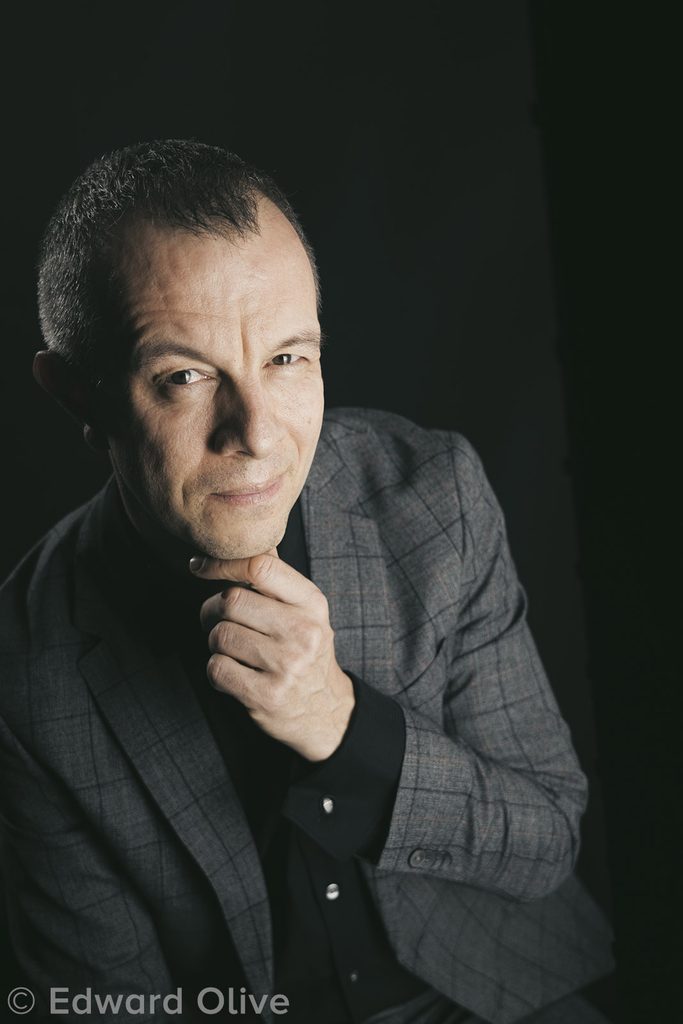
Delivered personally by Edward Olive—former London/Paris commercial litigation solicitor, former university law lecturer, professional actor, and native British voiceover artist—our 1-to-1 Executive Q&A Coaching equips leaders with advanced verbal frameworks, physiological state control, and narrative authority.
Available in-person at our broadcast-grade media studio in Madrid, Spain (Barrio de Lucero, Metro Lucero Line 6 Circular) or 100% online worldwide.
High-Stakes Stakeholder Arenas We Prepare You For
- Board of Directors & Audit Committees: Defend strategic capital allocation, M&A integrations, and operational roadmaps against sharp cross-examination.
- Trade Union Works Councils & Labor Negotiations: Balance empathy with uncompromising legal authority when communicating site reorganizations, hybrid office mandates (WFO), or workforce adjustments.
- Institutional Shareholder & Analyst Earnings Calls: Crush oversimplified binary trap questions from financial analysts without sacrificing regulatory compliance or corporate confidentiality.
- Parliamentary & US Senate Investigative Committees: Maintain calm, dignified posture under hostile political interrogation.
- Media Panels, Webcasts & Press Conferences: Master soundbite delivery, bridging, and message control under live broadcast scrutiny.
The Multidisciplinary Edge: Law, Performance & Diction
Your coaching is led by Edward Olive, combining legal rigor with stagecraft:
- Former Commercial Litigation Solicitor: Qualified Solicitor of the Supreme Court of England and Wales (Constant & Constant, London/Paris), experienced in adversarial cross-examination and high-stakes dispute resolution.
- Former University Law Lecturer: Taught law at the University of Leeds and London City University, bringing logical precision to complex narratives.
- Professional Screen & Stage Actor (Since 1998): Formally trained across London and Paris at RADA (Royal Academy of Dramatic Art), The Actors Centre, City Lit, and Studio 34, providing mastery over physiological state control under extreme pressure.
- Native British Voiceover Artist & Diction Coach: Expert in diaphragmatic projection, vocal resonance, and eliminating high-pitched tension or vocal stamina issues.
Broadcast-Grade Acoustic Studio in Madrid
Sessions are conducted in our dedicated private studio at The Factory Lucero in Madrid:
- 4K Ultra-HD Video Mock Briefings: Replicate hostile committee tables or broadcast press setups and review playback line-by-line.
- Neumann Studio Microphones & Audio Monitoring: Track filler words, vocal pitch spikes, hesitation, and breath control in high definition.
- Real-Time Structural Playback: Deconstruct body language, eye contact, and logical framework adherence under simulated pressure.
Advanced Executive Q&A Playbook: Deconstruct & Command
When cross-functional directors, activist shareholders, union representatives, or parliamentary members press an executive with hostile or oversimplified questions, standard answers fail. Answering off-the-cuff signals a lack of strategic control.
Below is the battle-tested executive toolkit deployed in our 1-to-1 coaching sessions:
1. Neutralizing Trap Questions: The Zoom-Out Framework (Macro-Bracketing)
When an investor, board member, or committee member asks an oversimplified, binary «Trap» Question (e.g., «Is this project going to be late or not?» or «Are we losing money on this restructuring?»), taking the bait with a simple «yes» or «no» is dangerous. A simple «yes» oversimplifies complex reality; a «no» reads as evasive or defensive.
The Zoom-Out Framework breaks the trap by shifting focus from an isolated micro-metric to the macro structural ecosystem:
[Trap Question] ➔ Step 1: Reality Acknowledgment ➔ Step 2: Macro-Bracket ➔ Step 3: Weighted Recommendation
- Step 1: Reality Acknowledgment (Neutralize Bias): Validate their focus on the key pain point without accepting their negative or aggressive wording.
- Formula: «Securing that exact margin/timeline is precisely what we are optimizing for…»
- Step 2: The Macro-Bracket (Zoom Out): Introduce the two overarching business dynamics driving the outcome.
- Formula: «To look at this accurately, we must balance two macro forces: on one side, [Variable A: e.g., backend infrastructure migration]; on the other side, [Variable B: e.g., automated validation curves]…»
- Step 3: Weighted Recommendation (Data-Driven Landing): Deliver a clear, decisive action plan.
- Formula: «Looking at the convergence of both variables, the predictive data shows that by [Action X], we eliminate the bottleneck entirely. That is the execution path.»
2. Managing Hostile Questions: The Bridge Back & Block
When facing hostile pushback from trade unions, media, or regulatory committees, getting defensive destroys authority. Executives use The Bridge Back to pivot from attack to message control:
[Hostile Question] ➔ The Power Pause (2s) ➔ The Broadening Bridge ➔ The Strategic Take-Back
- The Power Pause (2 Seconds): Settle the room with a silent hold and direct eye contact. It breaks the urge to reply defensively and signals complete emotional control.
- The Broadening Bridge (De-escalate & Reframe): Lift the perspective from a localized grievance to a strategic goal.
- Bridge Connectors: «That brings up a critical broader point regarding our overall footprint…» or «While that is an important detail, the core issue we are solving right now is…»
- The Strategic Take-Back (Return to Message): Land on your primary strategic objective.
- Formula: «…and that is precisely why our investment strategy focuses on long-term capital preservation.»
3. Core Structural Formulas for Board & Committee Briefings
Executives must match their answer structure to the precise nature of the query:
| Framework | Structure | Best Used For |
| PREP | Point ➔ Reason ➔ Example ➔ Point | Rapid-fire media panels, policy defense, or direct corporate Q&A. |
| PEEL | Point ➔ Evidence ➔ Explanation ➔ Link | Deep analytical questions, financial audits, or technical architecture. |
| ARC | Acknowledge ➔ Reframe ➔ Commit | Internal sensitive questions (workforce changes, budget reallocations). |
| STAR | Situation ➔ Task ➔ Action ➔ Result | Explaining structural transformations, past turnarounds, or crisis resolution. |
| 4Ps | Promise ➔ Picture ➔ Proof ➔ Push | Town halls, union negotiations, and major cultural alignment drives. |
4. The Art of Strategic Deferral (Mastering the Executive Non-Answer)
Fast answers are often weak answers; a calculated deferral signals senior executive composure. When asked about unannounced mergers, ongoing litigation, or unfinalized board decisions, deploy Strategic Deferral:
- The Physical Reset: Take a slow, deliberate sip of water or a 5-second breath reset. This forces the room to wait, establishing high status.
- Label the Gravity: Acknowledge the question’s significance («That touches on critical regulatory parameters currently under review…»).
- The Executive Deferral: Shift focus from premature speculative dates to ongoing analytical rigor.
- Formula: «Our priority right now is ensuring complete structural stability for all stakeholders. We are in the formal review phase and will present the complete data set to the board at the Q3 briefing.»
Transform Your Leadership Presence
Command the boardroom, align stakeholders, and dominate high-pressure Q&A sessions—in Madrid or online worldwide.